 The Canyon Review
The middle tier is usually the right tier
Vendors design three-tier pricing around one tier they want you in and two decoys. The pattern, the exceptions, and how to check in five minutes.
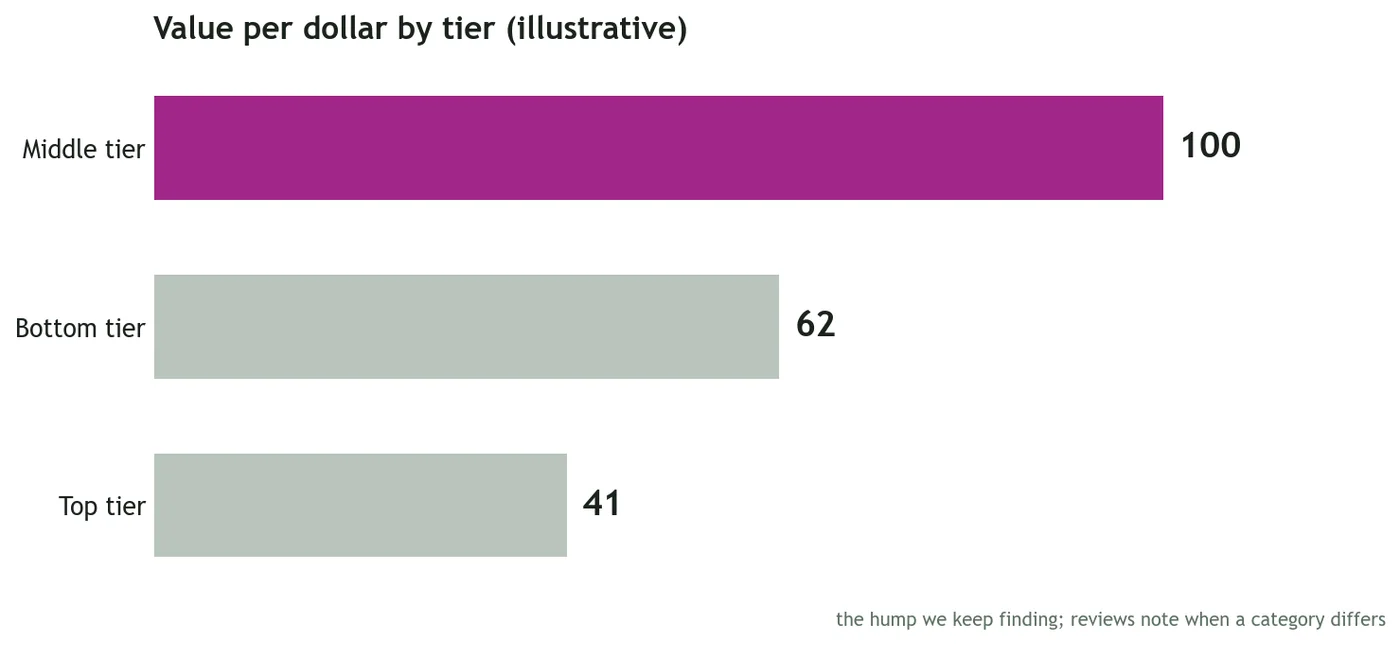
You want the middle tier. We keep writing that sentence in reviews, so here is the standing argument, once, with the exceptions attached.
Three-tier pricing is a designed object. The bottom tier exists to publish a low starting price and to make the middle tier look complete; the top tier exists to make the middle tier look cheap. Somewhere in a spreadsheet the vendor has a target mix, and the target is the middle. That is not cynicism, it is menu design, and restaurants have done it since menus existed.
It follows that the middle tier is where the product team put the features the product actually needs to be useful. The bottom tier is the product minus one load-bearing feature: the audit log, the second environment, the retention that covers a real incident. Check your own tooling stack; the odds that the missing feature forced a tier upgrade within a year are, in our review history, better than even.
The top tier, meanwhile, is where features go to justify a multiple: the dashboard nobody opens, the SLA that refunds pennies, seats for personas who log in quarterly, and, notoriously, single sign-on (scored separately, because it deserves it).
The five-minute check before any purchase: take the bottom tier and write down the first feature you will miss and the month you will miss it. Take the top tier and name the feature you would actually exercise this quarter, excluding the ones that belong in every tier. If the first list has an entry inside a year and the second is empty, the middle tier just won, which it does roughly four times out of five in our reviews.
The exceptions, because the rule is a pattern and not a law. Tools where the bottom tier is honestly complete (rare, praised by name when we find them). Compliance-driven buys where the required control genuinely lives at the top. And usage-priced products with no tiers at all, which have their own failure modes and their own reviews.
The chart is illustrative: value per dollar humps at the middle rung in category after category we have priced. When a vendor's hump sits somewhere else, we say so in the ranking. When it doesn't, you want the middle tier.