 The Canyon Review
Kubernetes distributions for small teams, ranked by regret
k3s, Talos, k0s, MicroK8s and managed EKS ranked for teams of ten or fewer. Scored on overhead, upgrade pain and time to first useful deploy.
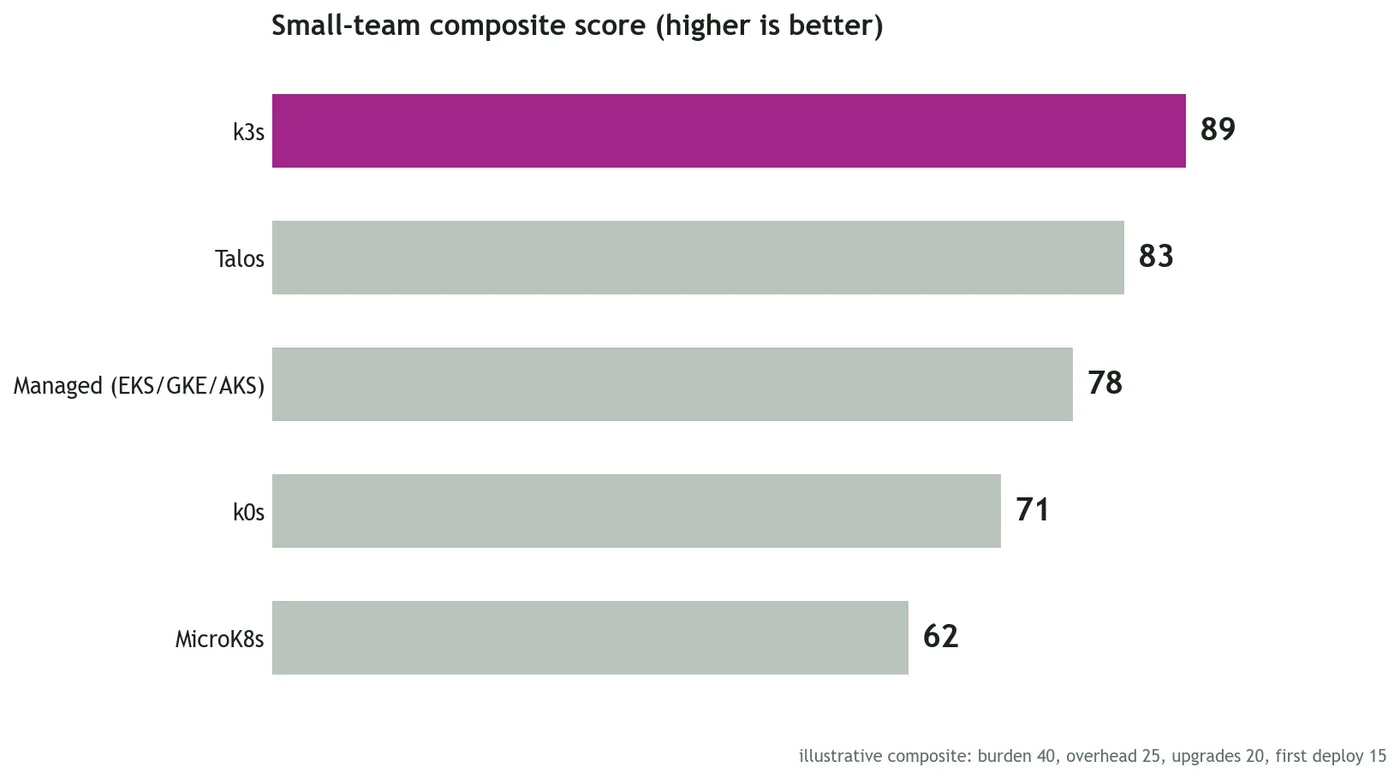
You want k3s. If nobody on the team enjoys operating Linux, you want your cloud's managed control plane instead and this article gets shorter. Everything else on the list is for teams with a specific reason, and we will name the reasons.
First, the standing question: should a team of ten run Kubernetes at all? Half the time the honest answer is no, a VM and a systemd unit are waiting patiently. This ranking assumes you crossed that bridge for real reasons: more than a handful of services, a need for declarative deploys, or software you run that ships as a Helm chart and nothing else.
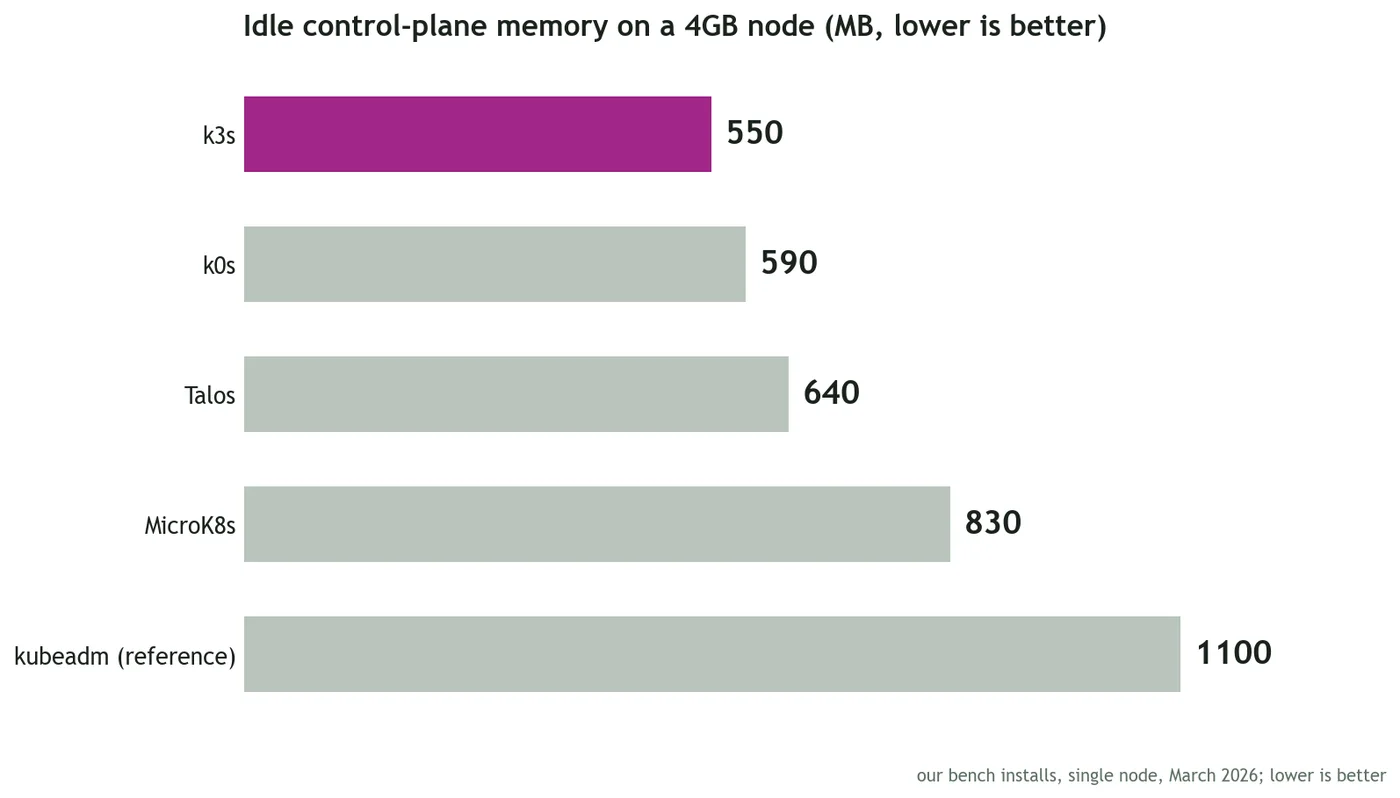
Criteria: operational burden 40%, resource overhead 25% (small teams run small nodes; the control plane eats from the same plate), upgrade pain 20%, time to first useful deploy 15%. Scores illustrative, from our bench installs on identical 4GB nodes, March 2026.
The table
| Rank | Distro | Overhead at idle | Upgrade story |
|---|---|---|---|
| 1 | k3s | lowest of the self-hosted set | replace one binary |
| 2 | Talos | low | declarative, immutable |
| 3 | managed (EKS/GKE/AKS) | not your plate | a button, on their schedule |
| 4 | k0s | low | fine, smaller community |
| 5 | MicroK8s | moderate | snap-driven, opinions follow |
Notes per rung
k3s wins the bracket the boring way: one binary, batteries included (ingress, storage class, service load balancer), SQLite instead of etcd until you actually need etcd, and a decade of small-team folklore for every problem you will meet. When something breaks, the answer is already on a forum. That is worth more than architecture.
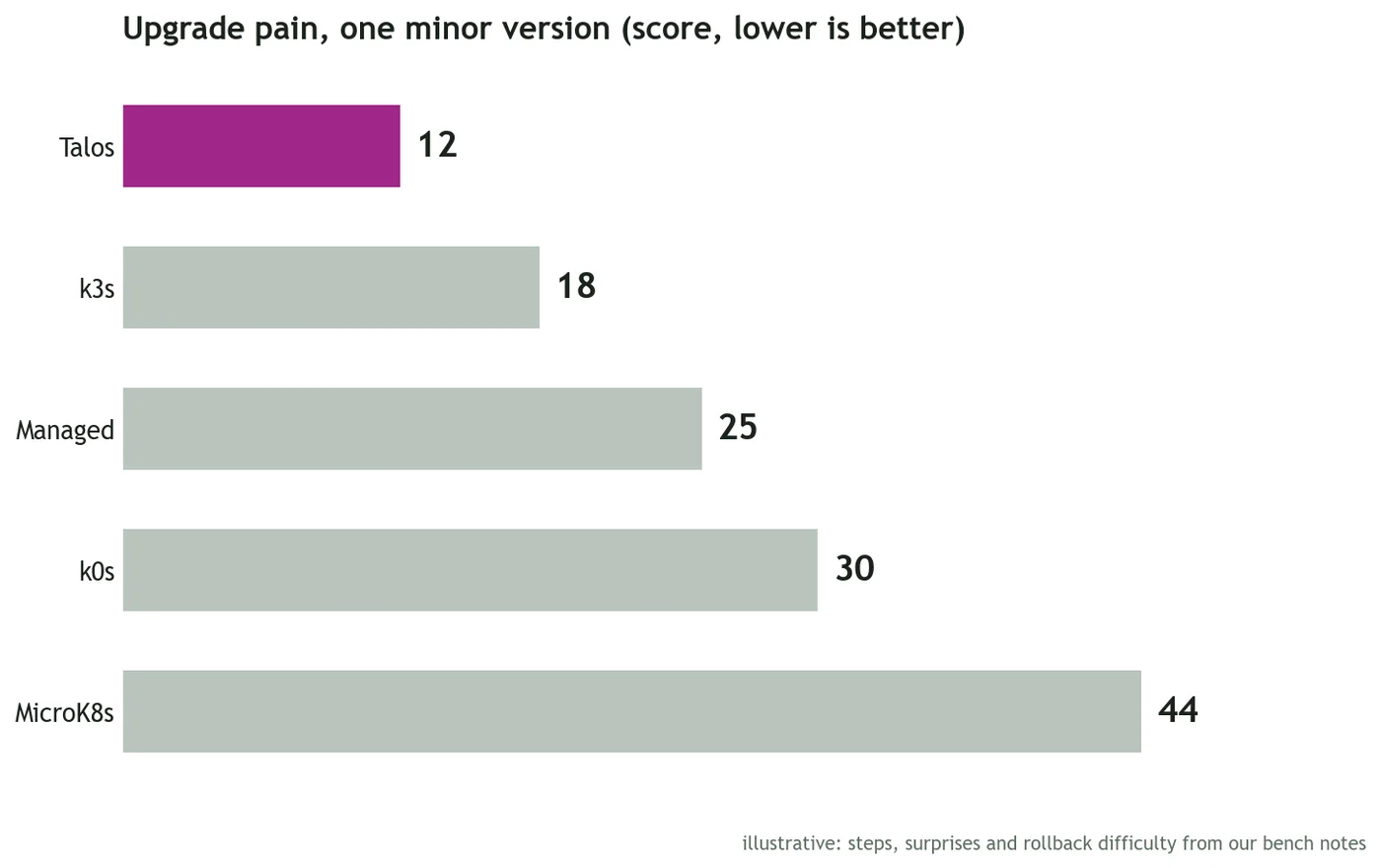
Talos is the interesting second. The whole OS is the Kubernetes node: no shell, no SSH, no package drift, managed entirely through an API. Our upgrade tests were the cleanest of the set, and the security posture is the best on this list by construction. The price is cultural: the day someone wants to "just SSH in and look", Talos says no, and your team either loves that or leaves.
Managed control planes rank third only because this is a self-hosted ranking at heart. If you are already on one cloud, the calculus flips: roughly $70 a month (EKS pricing) to never think about etcd backups is the cheapest pager relief on this page. The regret cases we collect are all multi-cloud teams who bought three different managed flavors and now run three subtly different Kuberneteses.
k0s is genuinely good and suffers only from the adjacency problem: it solves k3s's problems, slightly differently, with a fraction of the community. Choose it if its architecture matches a constraint you actually have; otherwise the folklore gap decides.
MicroK8s works, and every operational path runs through snap packaging, which our bench notes describe as "opinionated in both directions". Fifth on burden, not on capability.
The skip
Full kubeadm on hand-rolled VMs, for a team of ten. That is not a distribution, it is a second job. It teaches you Kubernetes the way falling off a roof teaches you gravity: thoroughly, and at a price the curriculum never justified. The certification path can have it. Production should be on the table above, and for most of you it should be row one.