 The Canyon Review
We benched five ways to build a portfolio site
Static generators, builders and WordPress, timed on throttled mobile. The gap between first and last place is the whole hiring impression.
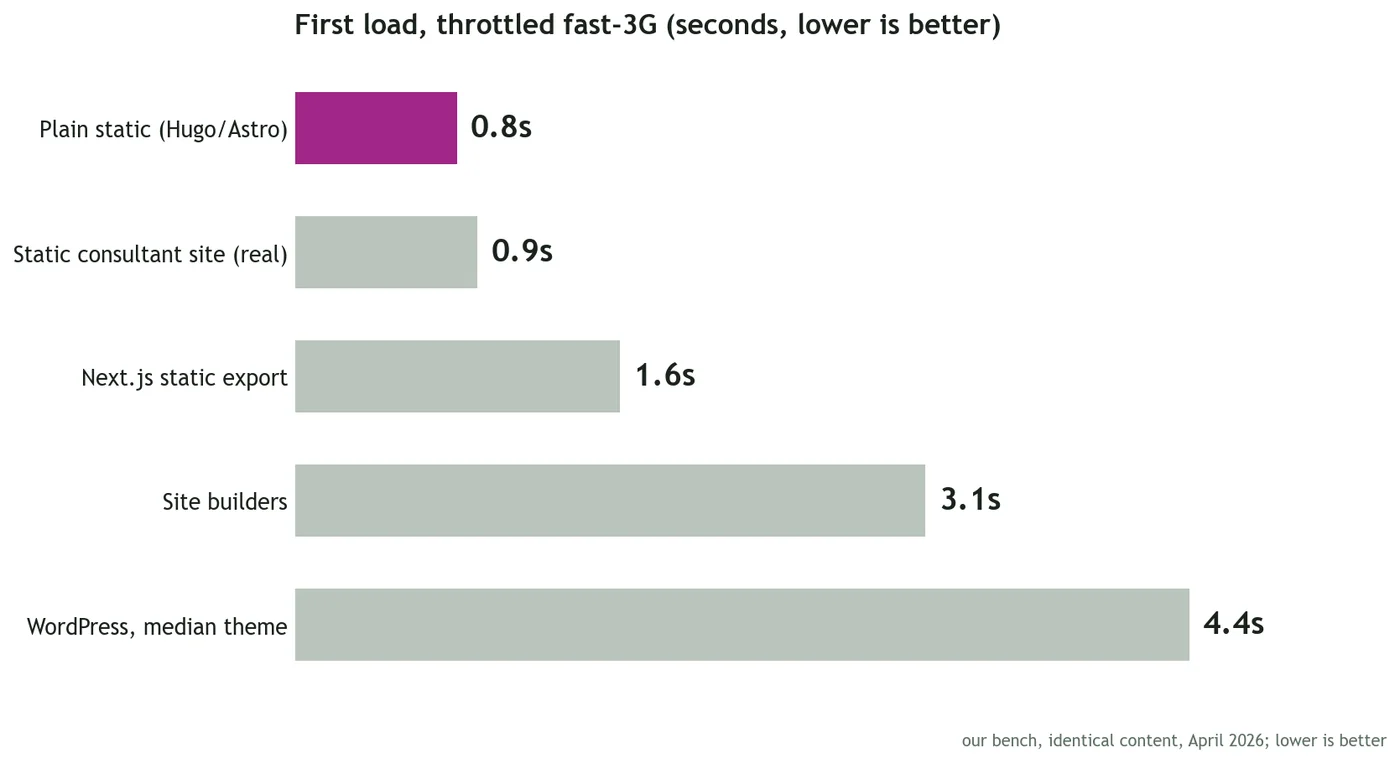
A portfolio site has one job: load before the person deciding about you stops caring. Google's own Core Web Vitals guidance puts the LCP bar at 2.5 seconds. Most portfolios we tested clear it on office wifi and fail it on the connection that matters, the recruiter's train.
Bench setup: five stacks, same single-page portfolio content, timed first load on a throttled fast-3G profile, April 2026. Numbers in the chart, illustrative of the pattern rather than your mileage.
- Plain static (Hugo/Astro, no trackers): comfortably under a second. HTML, one stylesheet, done.
- Static with restraint, real example: a software architect portfolio like this one shows the production version of the pattern: lean output, case studies as pages, no analytics bloat, fast on the worst connection we could simulate. This is the bar, and it is reachable by one person who cares.
- Next.js static export: fine, if you resist the ecosystem's gravitational pull toward shipping a framework to render three paragraphs.
- Site builders: two to four seconds of other people's JavaScript. The design templates are lovely and the recruiter is watching a spinner.
- WordPress with a theme: the median theme ships more code than the other four stacks combined. It can be made fast; the default is not; you will not maintain the exception.
The skip: anything where your bio waits on a cookie banner for trackers you installed to watch nobody visit.
Verdict: static output, system fonts, one image of your actual face or actual work. Row two proves the pattern survives contact with a real consulting business. Under a second is a differentiator precisely because, on the evidence above, most of the field declines to be.